Night Sky Photographs: How to Find and Buy Fine Art Prints
Night sky photographs hold a kind of power that few other subjects in fine art photography can match. There is a specific kind of silence that comes with standing under a genuinely dark sky. The Milky Way doesn't appear gradually; it arrives all at once, a river of light so dense and textured that depth itself becomes visible. The scale is disorienting in the best way. Many viewers rarely experience a genuinely dark sky in person, miles from the nearest town, waiting for their eyes to fully adjust. But the right fine art print, composed with intention, shot from a location of real darkness, and produced on a museum-quality substrate, can carry that same emotional weight into a living room, a hotel lobby, or a bedroom wall.
Not every night sky image achieves that level of impact. The difference between a forgettable snapshot and a print worth collecting comes down to several specific things: the quality of the darkness where it was made, the precision of the technical craft behind it, and the substrate it ultimately lives on. Randy Bott Photography's limited edition landscape and nature prints reflect exactly this combination of technical rigor and emotional depth. It is the kind of work where you feel the cold air just by looking at it.
What separates breathtaking night sky photographs from ordinary snapshots
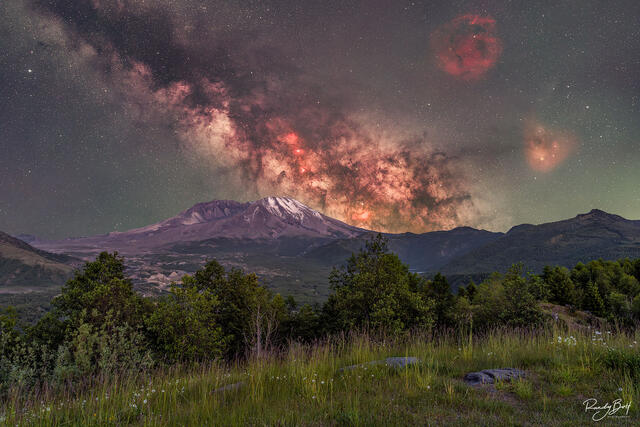
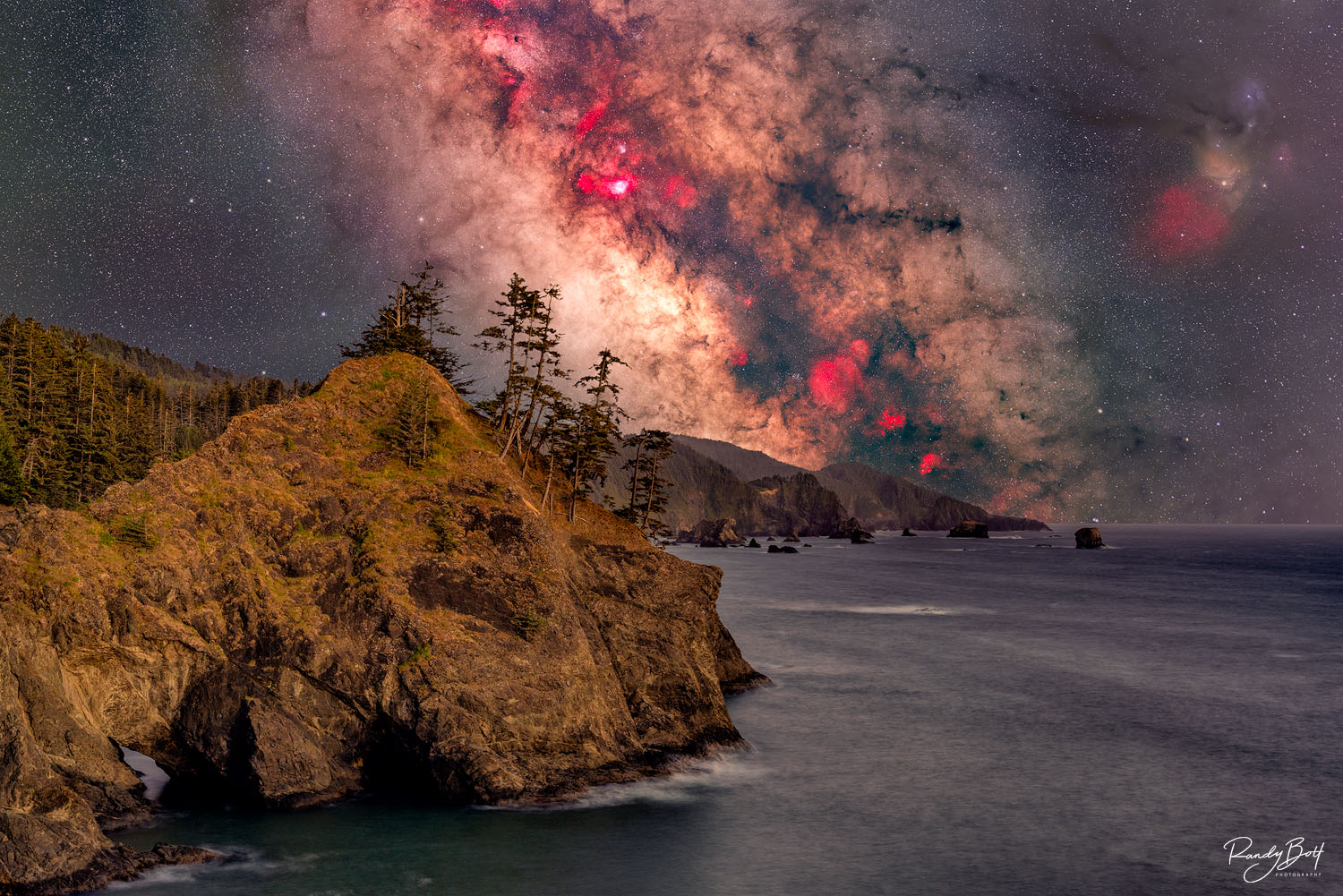
Great astrophotography images don't happen by accident. A compelling foreground transforms a photograph of the sky into a full story. A lone pine silhouetted against the galactic core, an alpine lake mirroring a river of stars overhead, a volcanic peak anchoring the frame while the Milky Way arcs behind it, these compositions work because the photographer planned them the way a painter plans a canvas: deliberately, with intention toward balance, depth, and emotional pull. The rule of thirds, leading lines, and the relationship between foreground scale and sky scale are all active decisions, not lucky accidents.
Paradoxically, the least light produces the most dramatic images of the night sky. This is where the Bortle scale becomes relevant. A Bortle Class 1 or 2 site represents the darkest conditions available, where faint phenomena like zodiacal light and subtle tonal gradations are much better preserved, allowing the sky to print with a deep, clean black background. Stars resolve with crisp separation, and the faint dust lanes of the galactic core hold their tonal gradations cleanly. A Bortle 5 or 6 site, by contrast, produces a lifted black point and compressed shadows, which flattens the final image and erases much of what makes the night sky so arresting. Location isn't just a backdrop for the photograph. It is a co-creator of the print's drama.
The technical craft that makes world-class astrophotography so rare
Every publishable night sky image is the result of a carefully managed balancing act. A skilled astrophotographer works with wide apertures, typically f/1.4 to f/2.8, and high ISO values in the range of 1600 to 6400. Shutter speeds are calculated to the second to prevent star trailing. The 500 rule offers a starting point: divide 500 by the focal length in millimeters to find the maximum exposure before stars begin to streak across the frame. On a full-frame camera at 14mm, that's roughly 35 seconds; on an APS-C sensor with its crop factor applied, the window is shorter. More precise photographers use the NPF formula, which factors in aperture and pixel pitch alongside focal length to nail the exact limit for a given sensor. A single usable frame can represent hours of field planning, multiple scouting trips, and dozens of test exposures.
Star trail photography adds another layer of complexity entirely. Rather than freezing the stars in place, star trail work intentionally tracks their apparent movement across the sky over the course of an hour or more, stacking multiple long exposures in post-processing to build the concentric arc patterns around Polaris. Aligning frames precisely, managing color consistency across a two-hour sequence, and blending the results without artifacts requires a command of tools like Lightroom and Photoshop that goes well beyond casual editing. Luminance noise reduction, careful white balance calibration, and layer masking are all part of the craft. This is the skill gap that separates fine art night sky photography from anything a smartphone can produce, and it is a significant reason why prints made from this work carry genuine artistic value.
Location and timing: the hidden ingredients in every iconic Milky Way image
The Pacific Northwest offers some of the most dramatic dark-sky locations in the United States. Washington's Table Mountain reaches Bortle Class 2 conditions within roughly two and a half hours of Seattle, making it one of the genuinely dark sites accessible from a major city. Goldendale Observatory State Park, a Bortle 3 certified dark-sky destination in south-central Washington, draws serious astrophotographers for its reliable conditions. The remote interior of Olympic National Park and the dark corridors of Mount Rainier round out a region where volcanic peaks, alpine lakes, and old-growth forest all become available foreground elements for the patient photographer willing to plan around the calendar.
Timing matters as much as location. The Milky Way core is visible in the Northern Hemisphere roughly from March through October, with peak visibility in the summer months. The optimal shooting window aligns with new moon phases, since even a half moon raises ambient light enough to wash out the fainter structures of the galactic core. A photographer who returns to the same location during the summer for the galactic core, builds a portfolio with both technical quality and narrative depth. That layered familiarity with a place is something serious collectors recognize when they encounter it in a finished print.

How post-processing and print substrate turn a raw file into museum-worthy wall art
The best night sky images are not simply captured. They are refined through a sequence of deliberate editing decisions. White balance choices shape whether the sky reads as a cool, silver-blue field or a warmer, more cinematic tone, values around 3800 to 4200K are a common starting point, though the final choice is an artistic one. Contrast and dehaze adjustments reveal the Milky Way's dust lanes without collapsing the surrounding shadow detail. Luminance noise reduction at ISO 6400 requires careful calibration: enough to clean the sky, but not so much that stars are smoothed into indistinct smudges. Stacking multiple aligned frames in Photoshop before finishing in Lightroom can further reduce noise and allow larger, cleaner prints without aggressive sharpening artifacts. These are artistic decisions as much as technical ones, and they define the image's final character as clearly as the original exposure did.
The substrate a finished file is printed on shapes how the viewer experiences it on the wall, and for long-exposure night photos, substrate choice is particularly consequential. HD Acrylic prints produce a luminous, glass-like depth that makes star fields appear to glow from within the wall surface, which is why they're especially well suited to Milky Way photography where the sky itself is the subject. Chromaluxe metal prints deliver strong contrast and dimensional sharpness, making them a natural choice for large-format statement pieces in commercial spaces. Hahnemühle Baryta paper offers a classic photographic feel, preserving the smooth tonal gradations and deep blacks that fine art black-and-white night photography demands. Choosing the right substrate is part of the artistic decision, not an afterthought. It is a conversation worth having before you commit to a print size or a wall placement.
How to find and buy night sky photographs worth collecting
Not every night sky print sold online is created equal. A file uploaded to a generic print-on-demand marketplace carries no provenance, no edition controls, and no relationship with the artist who made it. A true limited edition fine art print is a different category of object. It is signed and numbered by the photographer, produced in a controlled and documented quantity, and accompanied by a Certificate of Authenticity that establishes the work's provenance and edition standing. These details matter to collectors because they establish both artistic credibility and the kind of scarcity that supports long-term value. When evaluating a print purchase, check edition structure, artist authentication, print quality, and documentation, and expect the paperwork to match the physical print.
Randy Bott Photography is built around exactly this standard. Limited edition landscape and nature prints are offered in controlled runs, signed and numbered by the photographer, and accompanied by a Certificate of Authenticity, see individual listings for edition size and full authentication details. Available substrates include HD Acrylic, Chromaluxe Metal, and Hahnemühle Baryta archival paper, each selected to match the specific character of the image it carries. For buyers looking for night sky and low-light landscape images that hold the same sense of awe you'd find standing in a remote Pacific Northwest meadow at 2 a.m., this is the standard to seek out. The online gallery at Randy Bott Photography is a good starting point for exploring what's currently available.

Bringing night sky photography into your space with confidence
Large-format night sky photographs work best as anchor pieces: a single dominant print on a feature wall rather than one element in a crowded gallery arrangement. Larger-format prints, 24 inches and up, for example, are often more immersive, allowing the fine detail of the Milky Way's dust lanes and the gradations from deep black to luminous galactic core to breathe properly. Below that threshold, that texture can feel compressed and diminished. When placing a large-format print, avoid direct sunlight, which degrades archival materials over time. Warm accent lighting directed toward the print draws the eye naturally and enhances the dimensionality of the substrate, particularly with HD Acrylic and metal prints.
Night sky photographs in deep blue or black-and-white tones work particularly well in neutral, minimal interiors where the image becomes the color story of the room. In commercial spaces such as hotel lobbies, corporate reception areas, or restaurant dining rooms, large Chromaluxe metal prints add a sophisticated, durable statement that reads clearly from a distance without requiring additional framing hardware. Before purchasing, it's worth speaking directly with the photographer or gallery about custom sizing, framing options, and substrate recommendations for your specific space. A considered conversation before you buy almost always produces a better result than choosing from a standard size list alone.
The print that changes a room
The feeling of standing under a truly dark sky is one of those rare experiences that recalibrates your sense of scale. The best fine art night sky photography carries a version of that feeling into permanent residence on a wall, shifting the atmosphere of a space the way great art always does.
Collecting well means looking for all the pieces together: a compelling foreground, a genuinely dark shooting location, the precision of a skilled astrophotographer, a substrate matched to the image, and provenance documentation that confirms what you're acquiring. When composition, location, technical craft, and print quality align, night sky photographs become transformational pieces of fine art. The photographer at Randy Bott Photography is available to advise on substrate selection, sizing, and custom framing before you commit to a purchase, the limited edition collection is a strong place to begin.