
If you've spent any time browsing fine art prints, you've probably hit the same wall I see a lot of collectors hit: you fall in love with an image, and then you're faced with four or five options for how to actually print it. Metal? Acrylic? Paper? Framed or unframed? It's a lot to sort through, especially when you're trying to picture how it'll actually look on your wall.
I get asked about this constantly — at art festivals, in emails, in the comments on my galleries — so I wanted to put together a real guide. Not a sales pitch for one medium over another, but an honest breakdown of how each one looks, feels, and performs, so you can pick the one that's actually right for your space.
HD Acrylic Prints
Acrylic is the print medium I'd describe as "the wow factor." The image is mounted behind a thick sheet of acrylic, which creates a sense of depth and luminosity that's hard to get any other way — colors look like they're glowing slightly, and there's a glass-like clarity that makes detail pop.
Best for: Bold, high-contrast images — dramatic skies, saturated sunsets, high-detail landscapes — displayed in a room where you want a genuine centerpiece. Acrylic prints read as more contemporary and gallery-like than a traditional framed piece.
Consider the lighting: Because the surface is glossy, acrylic can pick up reflections from windows or overhead lighting. It's stunning in the right spot but worth thinking about where the light in your room falls before you commit to placement.
Care: Comes ready to hang with an inset French cleat, and cleans easily with a soft microfiber cloth.
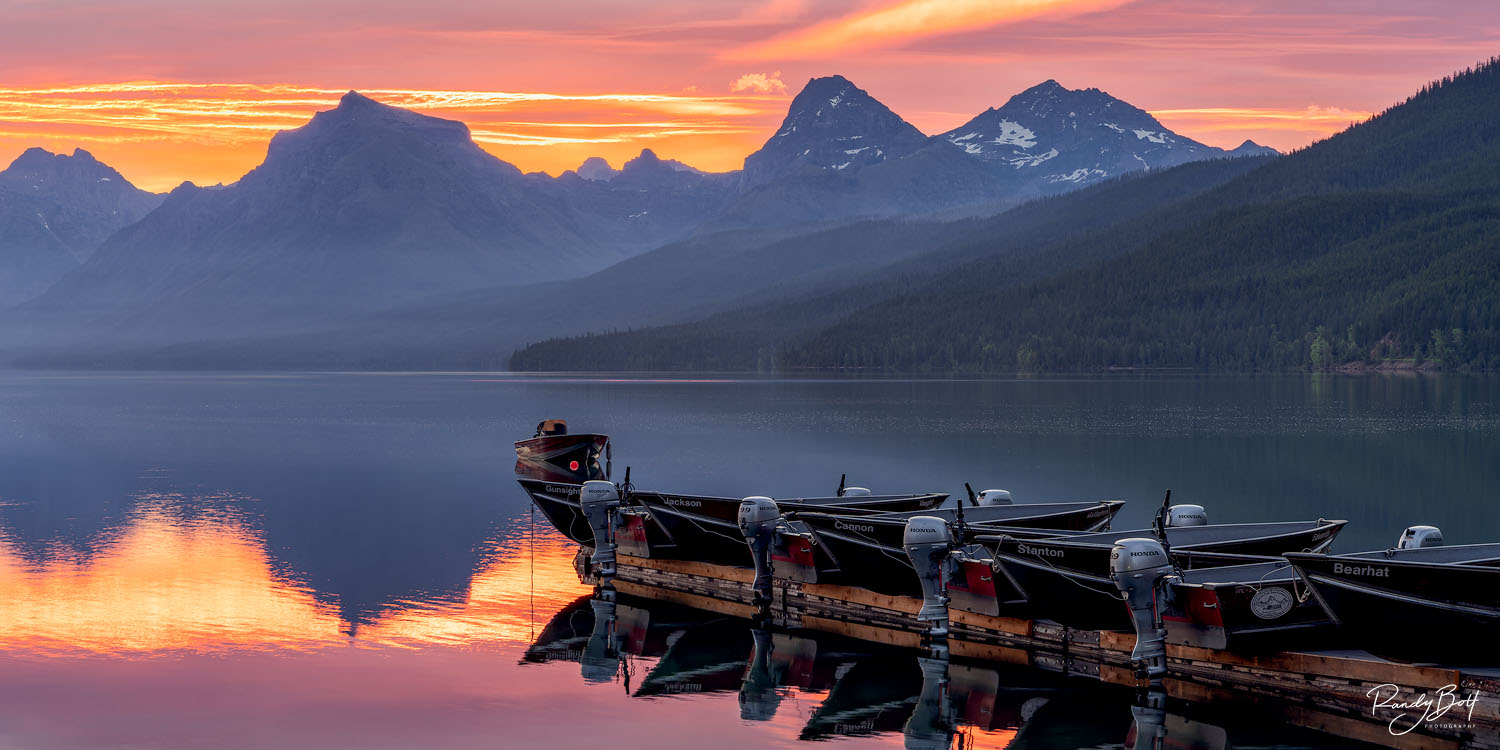
The wooden dock extends into the glassy, perfectly still water that pulls the viewer’s eye straight into the heart of Glacier National Park. On the dock are the iconic, brightly colored small rental motorboats and canoes. At this hour, they sit entirely motionless, casting crisp, mirrored reflections across the dark surface of the lake. Through the ultra-clear shallows near the shore, the lake's famous rainbow-colored, glacier-carved pebbles are subtly visible beneath the water's surface. Limited edition print from the Panorama gallery.
Chromaluxe Metal Prints
Metal prints are printed directly onto a specially coated aluminum sheet, which gives the image a smooth, almost luminous finish with excellent color vibrancy and sharpness. They have a modern, minimalist look — no visible frame, no glass, just the image itself with a slight sheen.
Best for: Contemporary and minimalist interiors, offices, and spaces where you want something sleek and low-maintenance. Metal handles fine detail and rich color extremely well, which makes it a strong choice for both landscape and infrared work — the slightly surreal tones in infrared photography in particular tend to look striking on metal.
Framed or unframed: I offer Chromaluxe metal both framed and unframed, so you can go fully modern and clean, or add a frame for a more traditional presentation without switching mediums.
Care: Also ready to hang out of the box, and metal is naturally resistant to humidity, making it a solid choice for spaces like bathrooms or sunrooms where paper prints wouldn't hold up as well.
Fine Art Paper (Hahnemuhle Baryta)
This is the classic, traditional choice — printed on 315gsm cotton rag fine art paper, the kind of paper used in museum and gallery prints for decades. It has a soft, matte-ish finish with rich blacks and a tactile, textured quality that acrylic and metal simply don't have.
Best for: Collectors who want that timeless, "fine art gallery" look, or who plan to frame the piece behind glass in a traditional frame. Paper is also the most affordable of the three mediums, which makes it a great entry point if you're building a collection over time or buying multiple pieces for a gallery wall.
One thing to know: Because it's an open edition rather than a limited edition, paper prints don't carry the same numbered scarcity as the acrylic and metal options. What you gain is flexibility and a lower price point without sacrificing print quality.
Care: Paper prints must be framed behind glass for longevity — this protects the surface and keeps colors accurate for years to come.

At sunrise, Moraine Lake in panorama format reveals an unforgettable scene of color and scale. The calm turquoise water stretches wide across the frame, perfectly mirroring the towering peaks of the Valley of the Ten Peaks. Soft golden light touches the rugged summits, casting a gentle glow that contrasts with the cool blues of the lake below. Along the shoreline, clusters of evergreens add depth and balance to the vast landscape. The panoramic view captures the full sweep of mountain, sky, and water, creating an immersive sense of being surrounded by the majesty of the Canadian Rockies at the break of day. Limited edition from the Mountains gallery.
Quick Comparison
HD Acrylic
Chromaluxe Metal
Fine Art Paper
Look
Glossy, deep, luminous
Sleek, modern, smooth
Soft, textured, traditional
Best for
Statement pieces, bold color
Minimalist/modern spaces
Classic gallery look, gallery walls
Framing
Ready to hang, unframed
Ready to hang, Framed or unframed
Requires framing behind glass
Edition
Limited edition of 200
Limited edition of 200
Open edition
Price point
Premium
Premium
Most affordable
So Which One Should You Choose?
Here's the honest answer: it depends less on the image and more on the room. If you're hanging a piece in a bright, modern living room and want it to be the first thing people notice, acrylic is hard to beat. If you're outfitting an office or a minimalist space where clean lines matter, metal is the natural fit. And if you love the idea of a traditional, framed gallery piece — or you're starting a collection and want flexibility — fine art paper gives you that classic look without the premium price tag.
If you're still not sure, that's completely normal — it's genuinely hard to judge from a screen. Feel free to reach out with the specific image and room you're working with, and I'm happy to walk you through what I'd recommend.
Ready to find your piece? Browse the fine art galleries or head straight to Prints and Framing for full sizing and pricing details.